AI Is Killing Thinking—Handwriting Brings It Back
Students love AI. Professors hate it. The reason might surprise you.

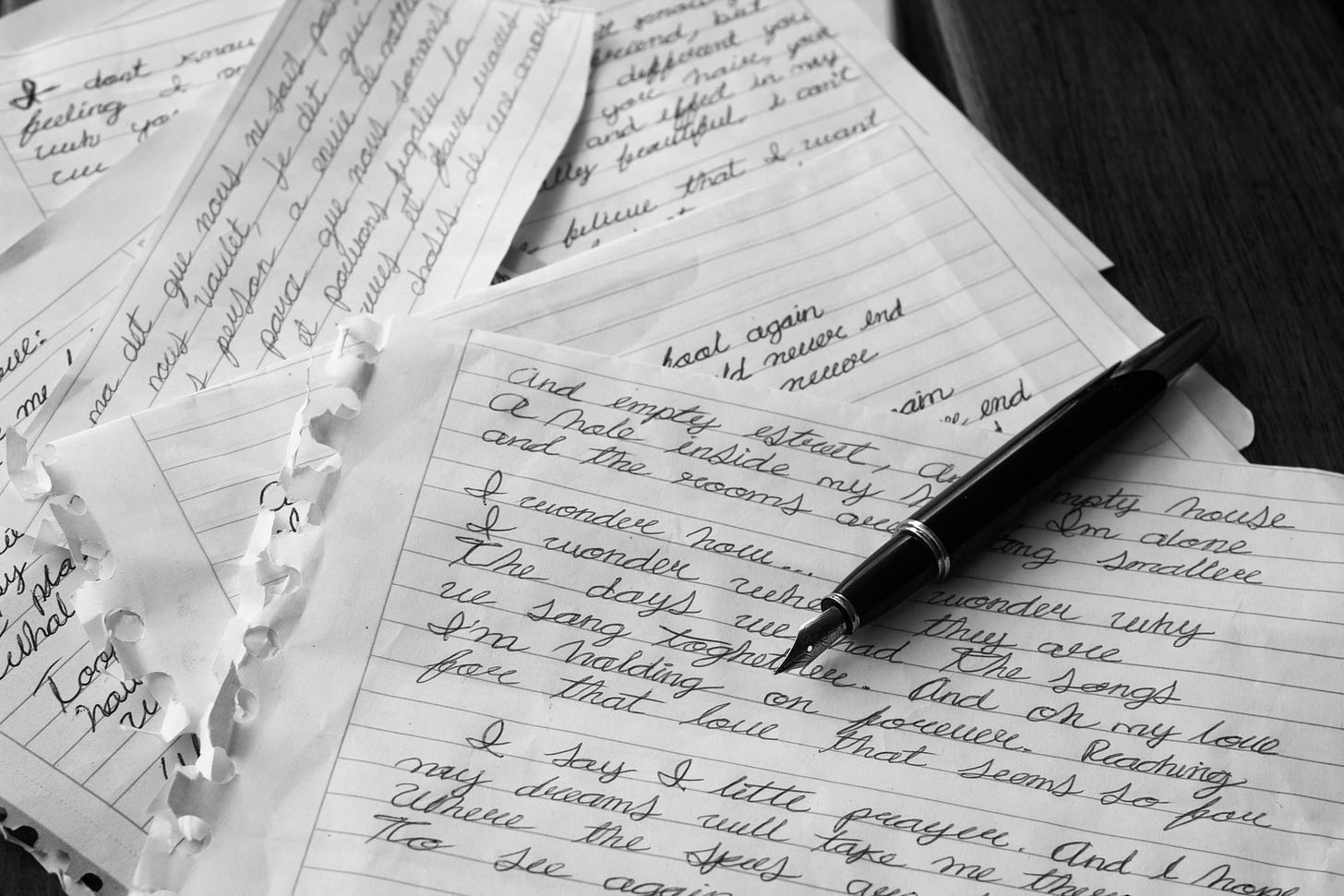
I was looking for another idea to write about in my next newsletter when suddenly I stumbled on an article called The Handwriting Revolution.
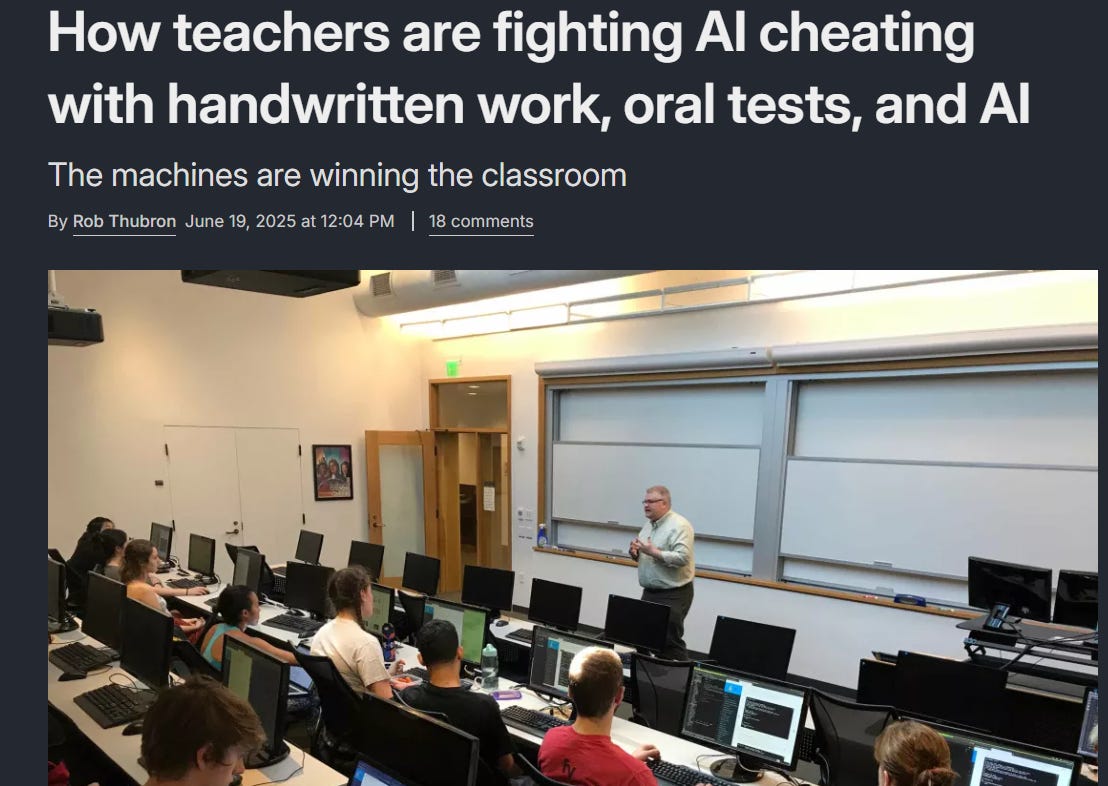
The headline grabbed my attention. It described how universities are bringing back handwritten tests and essays because of AI.
At first, I was confused.
Why would higher education want to go back to the 2000s? Didn’t we say that AI is going to change the world? Take our jobs?
But the more I read, the more it became clear to me: professors are not particularly worried about cheating but about a much deeper problem.
Writing is thinking
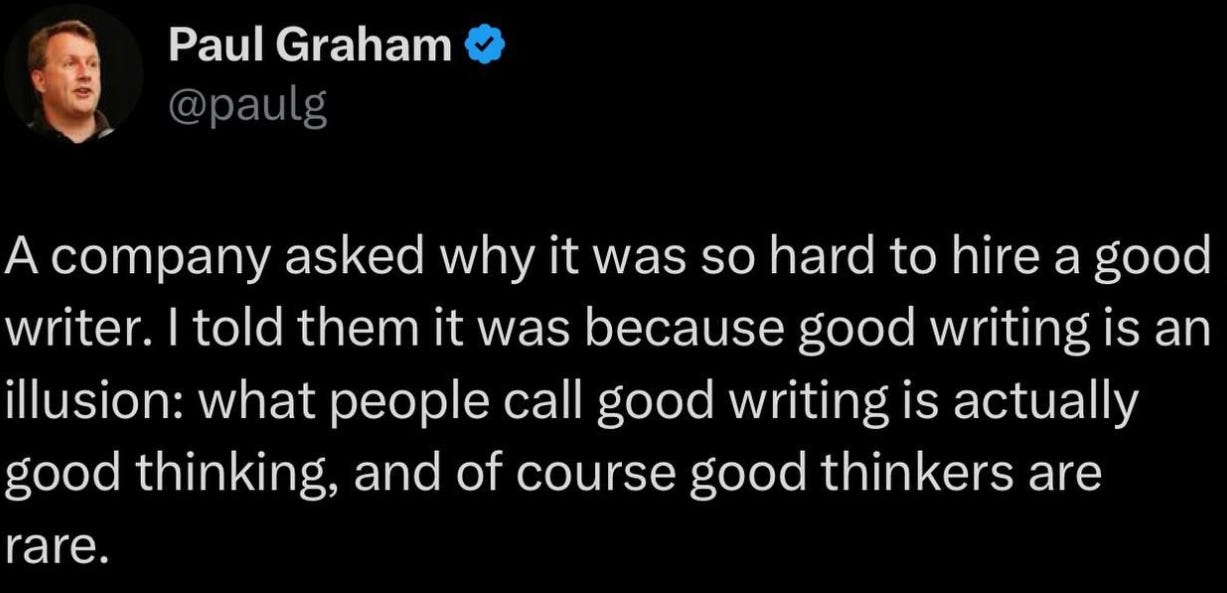
Paul Graham, co-founder of Y Combinator, once said it’s hard to find a good writer because good writing requires good thinking.
That’s exactly what worries professors.
So of course universities are banning AI. They want the student to learn to think.
They have a responsibility to prepare students for the real world.
And in the real world? ChatGPT is not going to do the work for you.
The truth is, most companies restrict AI not because they dislike innovation—but because every prompt risks exposing confidential data to the model training process.
So how do you rebuild the habit of thinking?
The solution is almost laughably simple—pen, paper, and your own brain
Most educators know they can’t fight or fully police AI in the classroom.
So instead, they bring back in-class handwritten assignments—where the prompt is revealed only once the class begins.
But here’s where it really gets absurd. The more students rely on AI, the more the system pushes them back into the analog world.
But that wasn’t the promise, was it?
We were told AI would solve our problems and take over the boring jobs. Yet here we are, realizing you can’t outsource your entire thinking to a machine.
Because the real issue isn’t AI itself—it’s how we choose to use it.
The 3-Step Framework That Turns AI from a Toy into a Tool
The best entrepreneurs I know don’t treat AI as a replacement. They treat it like an intern. And they all follow the same three-step approach.
First, they train AI on their own knowledge
They understand that ChatGPT needs context to perform well. The biggest mistake most people make is assuming it already knows what they want.
So they train it the same way they’d train a new hire—because the more context you give, the better the output you get.
Second, they test the output
As advanced as AI seems, it still produces biased or inaccurate results—and sometimes even makes things up just to sound smart I guess :)
That’s why they always review what it generates, checking whether it actually delivers the result they intended.
Third, they retrain the AI to improve its results
This step is all about refinement—adding more context, clarifying instructions, and guiding the chatGPT closer to the outcome they want.
Each revision makes the model a little sharper, a little more aligned with their thinking. This isn’t theory—I’ve built my entire writing process around it.
How I Use AI Without Losing My Own Thinking
AI helps me write faster. But only after I’ve done the thinking myself. I will never start by asking AI for a finished draft. That’s a mistake.
I will begin by digging into the topic myself. I’ll use AI to break things down, summarize research, or pull in extra context.
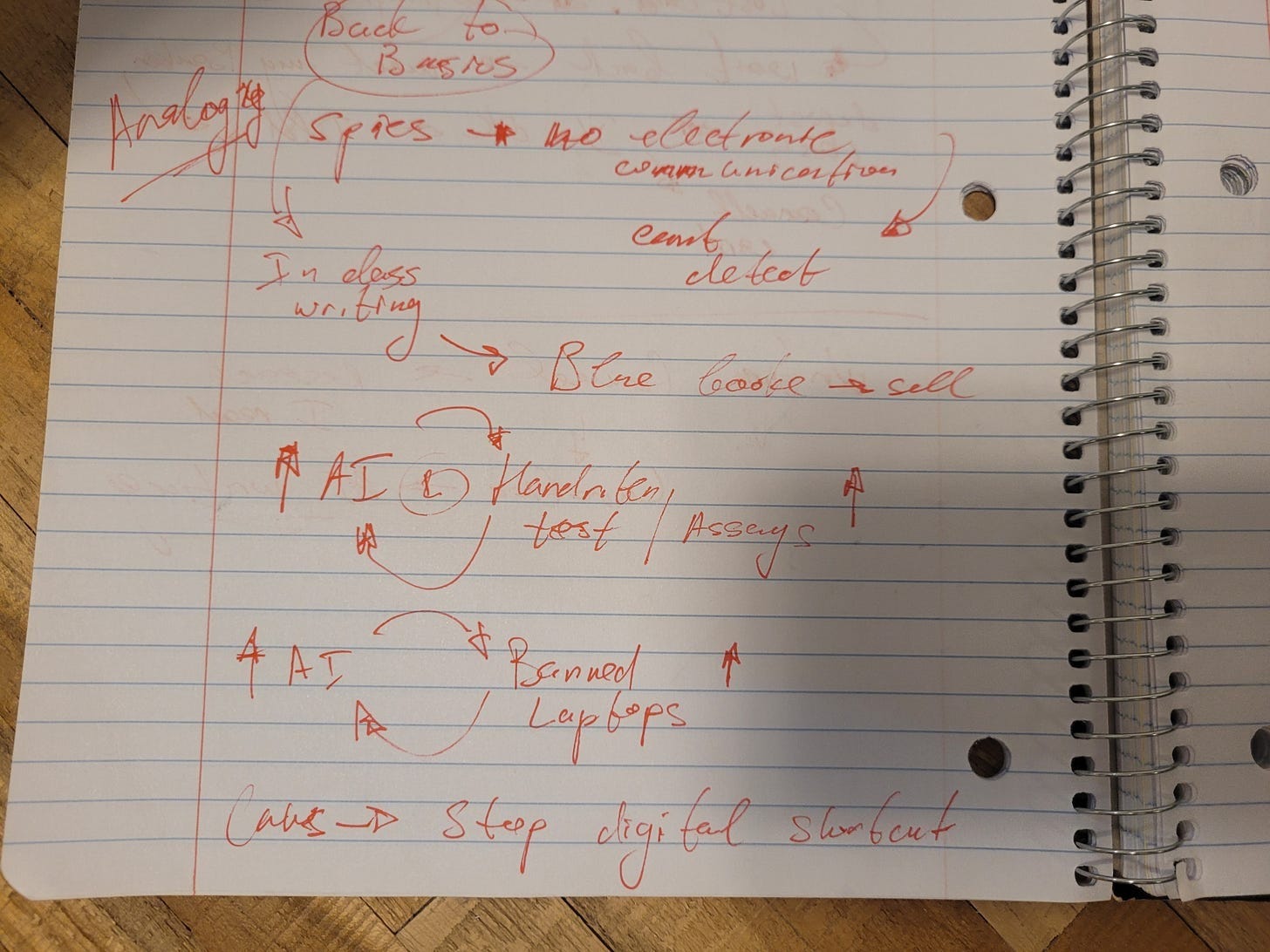
Then I make my own notes. I sketch out loops and diagrams. I look for insights hiding between the lines.
Only after I’ve done that thinking myself do I bring AI back in. Not to write the piece for me, but to polish, to test headlines, to push wording.
The ideas are mine—AI just helps me sharpen them.
That’s a wrap
Writing isn’t just putting words on paper—it’s thinking.
When students outsource essays to AI, they outsource their learning.
Universities are pushing handwriting to force students back into the struggle of real thinking.
The problem isn’t AI itself—it’s how we use it.
The best way to use AI? Treat it like an intern: train it, test it, correct it, then use it to sharpen your own ideas.
Nikita